Deer Season Is Here: What Iowa Drivers Need to Know About Deer-Vehicle Accidents and Insurance
Fall driving in Iowa brings colorful leaves, harvest season—and a much greater chance of encountering deer on the road.
For drivers in Waukee, Des Moines, and surrounding Central Iowa communities, October is a good time to slow down, stay alert, and make sure you understand how your auto insurance works if a deer suddenly appears in front of you.
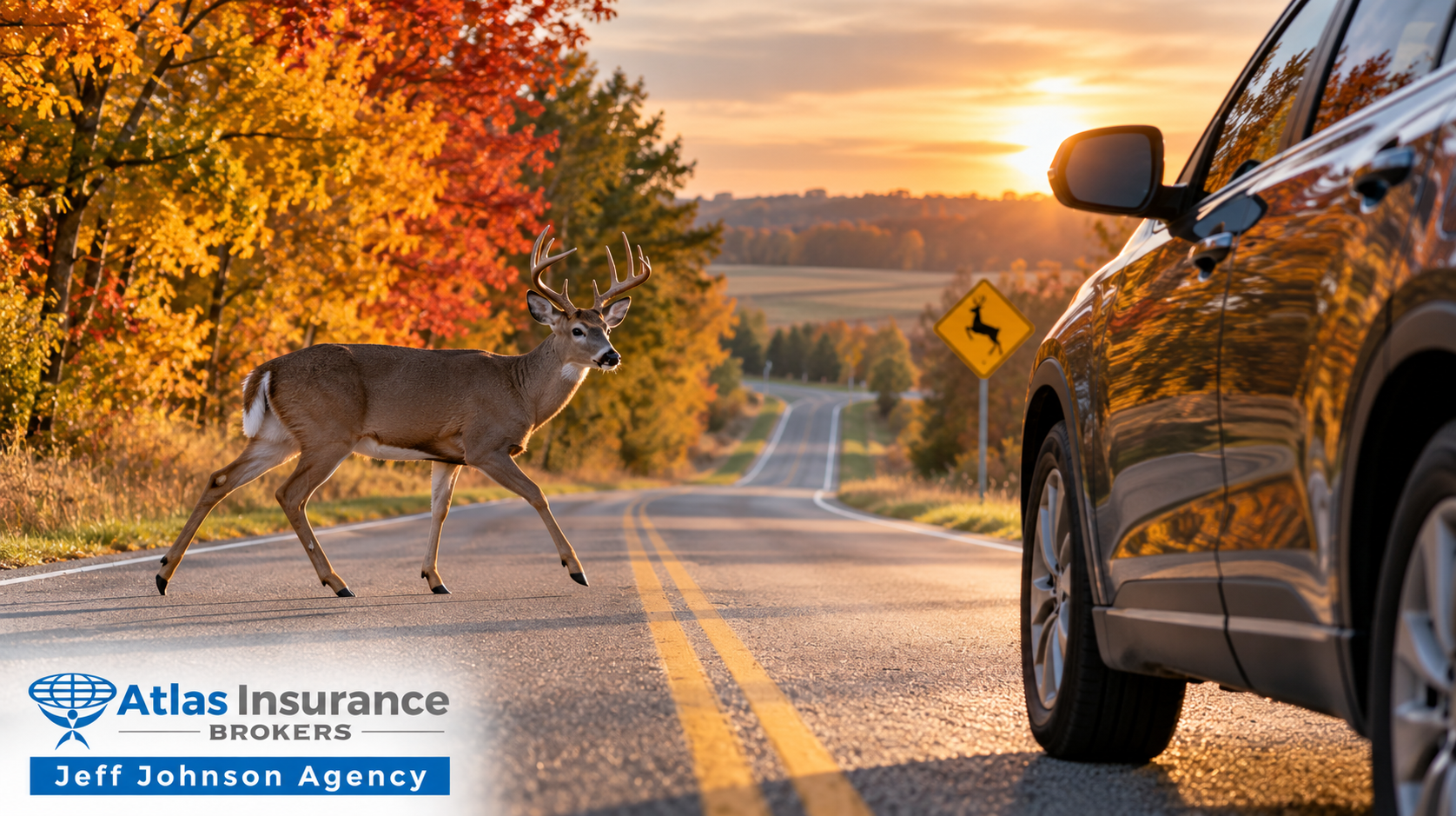
The risk isn’t hypothetical. The Iowa Department of Transportation identifies October, November, and May as peak months for deer collisions. Iowa DOT also reported 8,023 vehicle-animal crashes in Iowa during 2023, resulting in five deaths, 23 serious injuries, and more than 260 reported minor injuries.
Understanding your coverage before a deer runs into the road is much easier than figuring it out while standing next to a damaged vehicle.
Quick Answer: Does Auto Insurance Cover Hitting a Deer?
Generally, damage from directly hitting a deer is handled under comprehensive auto insurance coverage—not collision coverage. Comprehensive coverage is optional unless required by a lender or lease, and a deductible usually applies.
However, there’s an important distinction: if you swerve to avoid a deer and hit a guardrail, tree, another object, or overturn your vehicle, that damage would generally fall under collision coverage instead. The Insurance Information Institute explains the difference between comprehensive and collision coverage and specifically identifies contact with animals as a comprehensive loss.
Because policies differ, always check your individual coverage with your insurance agent.
Why Are Deer Collisions Such a Problem in Iowa During Fall?
October marks the beginning of one of Iowa’s higher-risk periods for deer encounters.
Harvest activity can move deer out of fields and into more open areas, while the fall breeding season increases deer movement. Shorter daylight hours also put more drivers on the road around dawn and dusk, when deer are particularly active.
And don’t assume deer are only a concern on remote country roads. Drivers around the growing communities of Central Iowa can encounter them near subdivisions, wooded areas, parks, highways, and roads bordering farm fields.
What Should You Do When You See a Deer?
Your first instinct might be to jerk the steering wheel to avoid hitting it. That can actually make the situation more dangerous.
Iowa DOT’s advice is simple: brake, but don’t veer.
Swerving can send your vehicle into another lane, a ditch, a tree, a guardrail, or an oncoming vehicle. The Iowa DOT driver’s manual advises motorists not to swerve or veer for deer because doing so can result in a more severe crash.
Drivers should also:
- Slow down in areas where deer are common.
- Be especially alert around sunrise and sunset.
- Scan both the roadway and shoulders.
- Use high beams when appropriate and legal.
- Wear your seat belt.
- Put the phone away and eliminate distractions.
- Remember that if you see one deer, there may be several more nearby.
What Should You Do After Hitting a Deer?
First, take care of yourself and your passengers.
If possible, move your vehicle to a safe location away from traffic, turn on your hazard lights, and contact emergency services when necessary. Don’t approach an injured deer—it may be frightened and unpredictable.
Document the scene when it is safe to do so. Take photos of the vehicle damage, roadway, and surrounding area, and contact your insurance agent or carrier to discuss the claim.
Iowa also has specific accident-reporting requirements. The Iowa Department of Transportation says drivers involved in an Iowa accident causing death, personal injury, or total property damage of $1,500 or more should contact the nearest law-enforcement agency to have the accident investigated.
Comprehensive vs. Collision Coverage Matters
This is one reason it’s important to understand more than whether you simply “have auto insurance.”
A liability-only policy doesn’t provide the same protection for your own vehicle as a policy that includes comprehensive and collision coverage.
For example:
You hit the deer: Damage to your vehicle would generally be considered a comprehensive claim.
You miss the deer but hit a guardrail: Damage would generally fall under collision coverage.
You don’t carry comprehensive coverage: Your policy may not pay for damage to your vehicle from directly striking the animal.
Your deductible and individual policy terms also affect what you pay out of pocket.
If you aren’t sure what protection you currently have, review your policy before peak deer season. You can also explore more information through Jeff Johnson Insurance’s Auto Insurance services.
Is Your Auto Coverage Ready for Iowa Deer Season?
October is a good reminder to look at your auto insurance before winter arrives.
Ask yourself:
- Do I have comprehensive coverage?
- What is my comprehensive deductible?
- Do I also carry collision coverage?
- Do I have roadside assistance or towing coverage?
- Is my vehicle’s current value adequately protected?
- Have I recently added or replaced a vehicle?
Jeff Johnson Insurance can help Central Iowa drivers review their current policies and compare coverage options. You can also find additional practical insurance information in the Jeff Johnson Insurance Tips section.
Frequently Asked Questions
Is hitting a deer considered comprehensive or collision?
A direct collision with a deer or other animal is generally covered by comprehensive insurance. If you swerve to miss the deer and instead collide with another object, that damage is generally handled under collision coverage.
Should I swerve to avoid hitting a deer?
Iowa DOT advises drivers to brake and stay in their lane rather than swerving. A sudden swerve can lead to a more serious crash.
Does liability insurance pay for damage to my car after hitting a deer?
Liability coverage generally pays for injury or property damage you cause to others. Damage to your own vehicle from hitting an animal generally requires comprehensive coverage.
Do I need to report a deer accident in Iowa?
Iowa DOT says an accident involving death, personal injury, or total property damage of $1,500 or more should be reported to the nearest law-enforcement agency for investigation.
Watch for Deer—and Review Your Coverage Before You Need It
Deer can appear with almost no warning, particularly during Iowa’s fall months. You can’t prevent every encounter, but slowing down, staying alert, and understanding your insurance coverage can put you in a much better position if one occurs.
Jeff Johnson Insurance serves drivers throughout Waukee, Des Moines, and surrounding Central Iowa communities. If you’re unsure whether your policy includes comprehensive coverage—or you haven’t reviewed your auto insurance recently—October is a great time to do it.
Contact Jeff Johnson Insurance or call (515) 987-4555 to review your auto insurance before peak deer season.